10 Years of the DADA2 Foundation

What 10 Years Means to Me

I’m not sure why we choose years like five, ten, or 25 to celebrate. After all, working at anything for any years-long span takes dedication. But today, we begin our 10th anniversary season that will last throughout the rest of 2026. After all, ten years ago this fall, we started the Foundation and held our first scientific meeting.
To me, ten years is a milestone that is as long as it took for our family to get a diagnosis for DADA2. It’s a milestone for us, and it’s a milestone for the Foundation – a before and an after.
In these years, we have accomplished a lot. But we also have a lot to pursue. And that is what this fall is dedicated to: creating the foundation to support what we know we can pursue and accomplish in the next ten years.
This past year also brought the loss of our disease’s co-founder, Dr. Dan Kastner, whose lab and clinic at the National Institutes of Health in Bethesda, Maryland, USA, has mixed clinical care and scientific discovery with exemplary compassion and academic rigor. Much has been said about Dr. Kastner’s accomplishments. So, we chose to honor Dan, the human scientist, in a piece written to remember his contribution to the disease and to each of us.
I hope you will join us as we kick off ten years of the DADA2 Foundation.
Chip Chambers

Chip Chambers, M.D., Founder & President, DADA2 Foundation
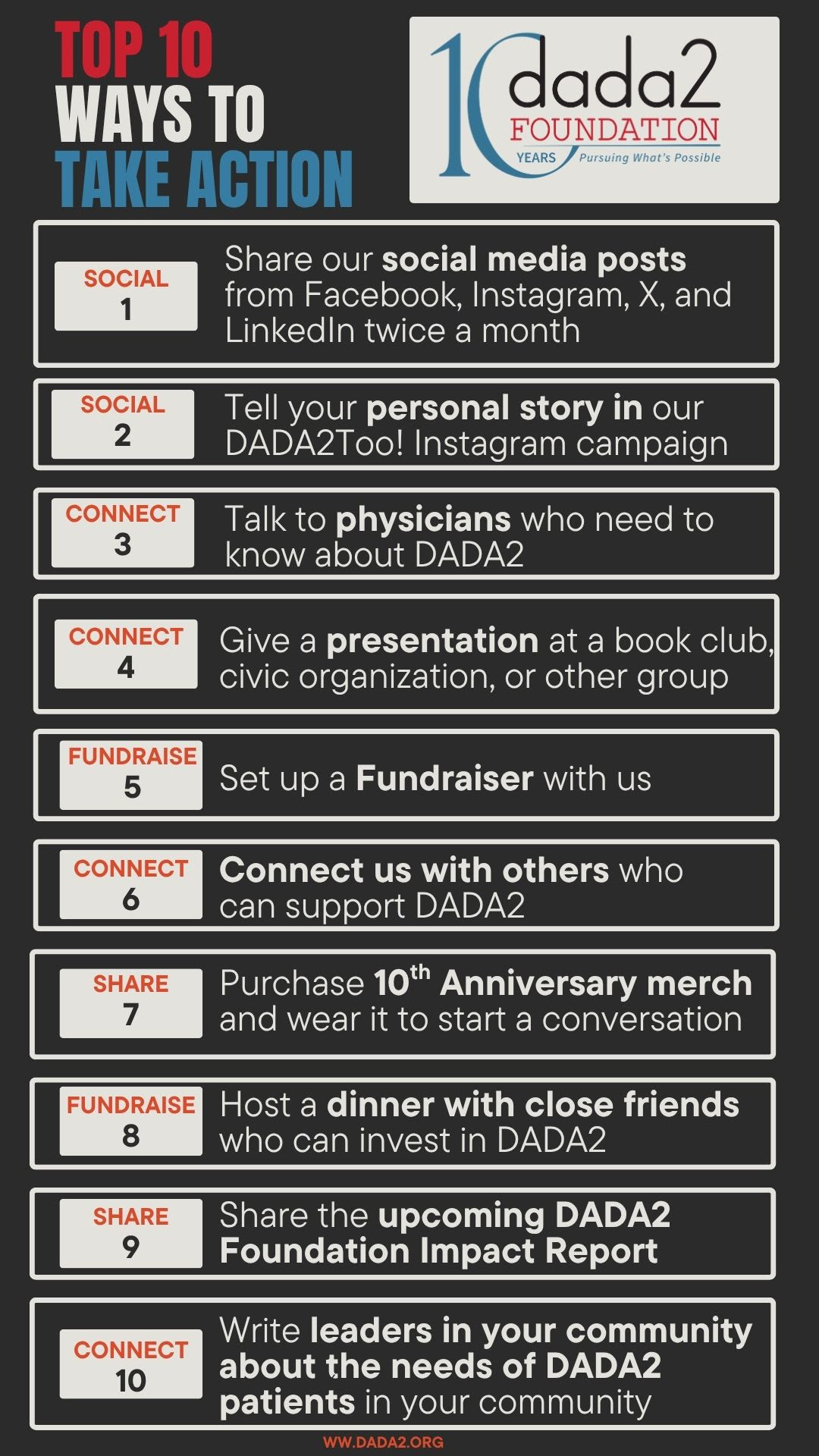
We invite you to raise awareness about DADA2 this Fall.
Here’s our Top Ten list of ways to get involved – we have resources to support you!
Email us at info@dada2.org to explore ideas!
Where in the World is DADA2?
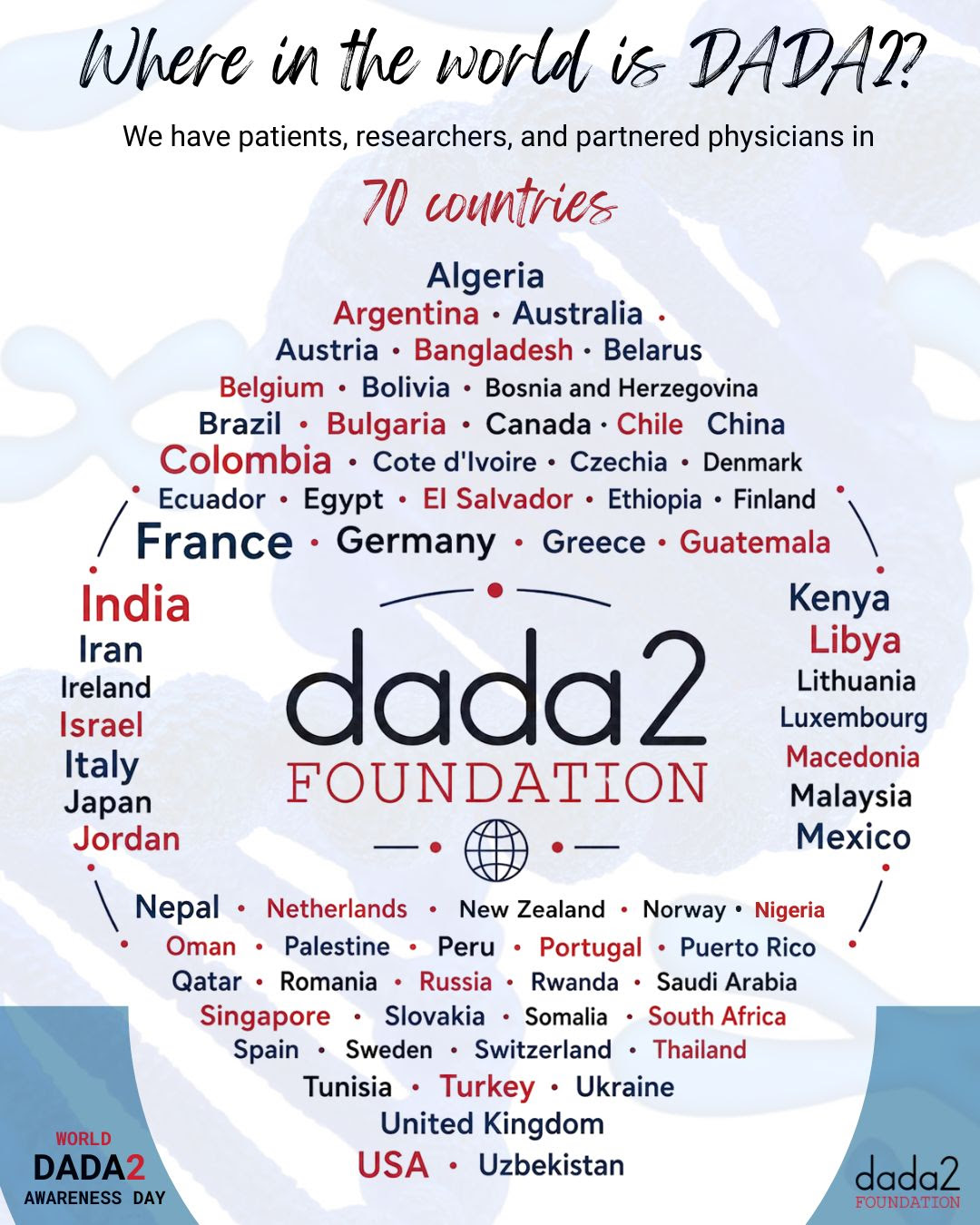
Our first Global Awareness Day left its mark. Check out our Instagram and LinkedIn pages for recaps and photos of the day. One fact we were able to confirm: there are 70 countries in the world where DADA2 is studied and/or where patients reside. While we are rare, we are present!
We are also partnering with global groups to support local efforts including:
- Testing days offered through the Vasculitis Society in India (Instagram) to offer DADA2 genetic testing days in local communities where prevalence seems to be high, followed up with patient support groups. We are providing translated materials.
- Creating country-specific links to our resources for physicians around the globe. Currently, those are available and active in Egypt, UK, South Africa, Australia, and India.
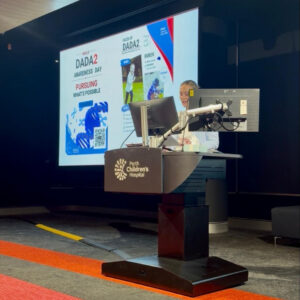
- Pictured here, providing a video-recorded expert clinician so one patient family could host a Grand Rounds talk – specifically to a medical faculty – at Perth Children’s Hospital in Australia.
Never Too Late for an Answer
Genetics are the key with DADA2 and any other genetic disease, as Elnaz has learned. She engaged in a 10-year journey to find out why her siblings lived their lives so ill and passed away in 2013 and 2014. It wasn’t until posthumous results from genetic testing in 2025 revealed a diagnosis of DADA2.
Today, Elnaz – who herself is not a patient or carrier – raises awareness for DADA2 in her home country. “My main goal is that no child in my community should suffer for years without a diagnosis because DADA2 is not recognized,” says Elnaz. “I hope that through awareness and education, more children and families can receive an earlier diagnosis and the support they need.”
Her efforts honor Elham, her sister who loved adventure, food, and traveling, and Ali, her brother who loved cycling, trucks, and performing as a vocalist. Perhaps a few of her efforts will inspire you:
- Elnaz runs an Instagram account dedicated to providing information in her country on DADA2 – symptoms, education, and resources.
- Elnaz also reaches out to physicians in her community to tell them how to watch for DADA2. We were thrilled to provide a letter of support for her work so that physicians knew that she was connected to our global efforts.
- She has translated DADA2 educational brochures and resources to make information about this rare disease more accessible for families and healthcare providers.
- She wears her DADA2 gear proudly (below) to remember her siblings (also pictured below).

Fortunately, more patients can be diagnosed today with DADA2 thanks to more frequent testing. We hope that a future point-of-care test will make it even easier and faster, so that families like Elnaz’s can avoid such a long diagnostic journey.
Latest Research
Deficiency of Adenosine Deaminase 2 in Paediatric Patients: A Case Series from Ireland. Almubarak, Rawan, et al. Frontiers in Pediatrics 14: 1878669.
Pure Red Cell Aplasia as the Sentinel Presentation of Deficiency of Adenosine Deaminase 2. Maurya, R. K., et al. Indian Journal of Hematology and Blood Transfusion(2026): 1-3.
Adenosine deaminase type 2 deficiency: From rare to common. Wouters, Marjon, et al. Journal of Human Immunity 2.5 (2026): e20260015.
Immune Dysregulation and Lymphoma Risk in Deficiency of Adenosine Deaminase 2.Akillioglu, Merve, et al. International Journal of Rheumatic Diseases 29.8 (2026): e70808.