
In loving memory
Dr. Dan Kastner
The Human Scientist
By Chip Chambers, M.D.
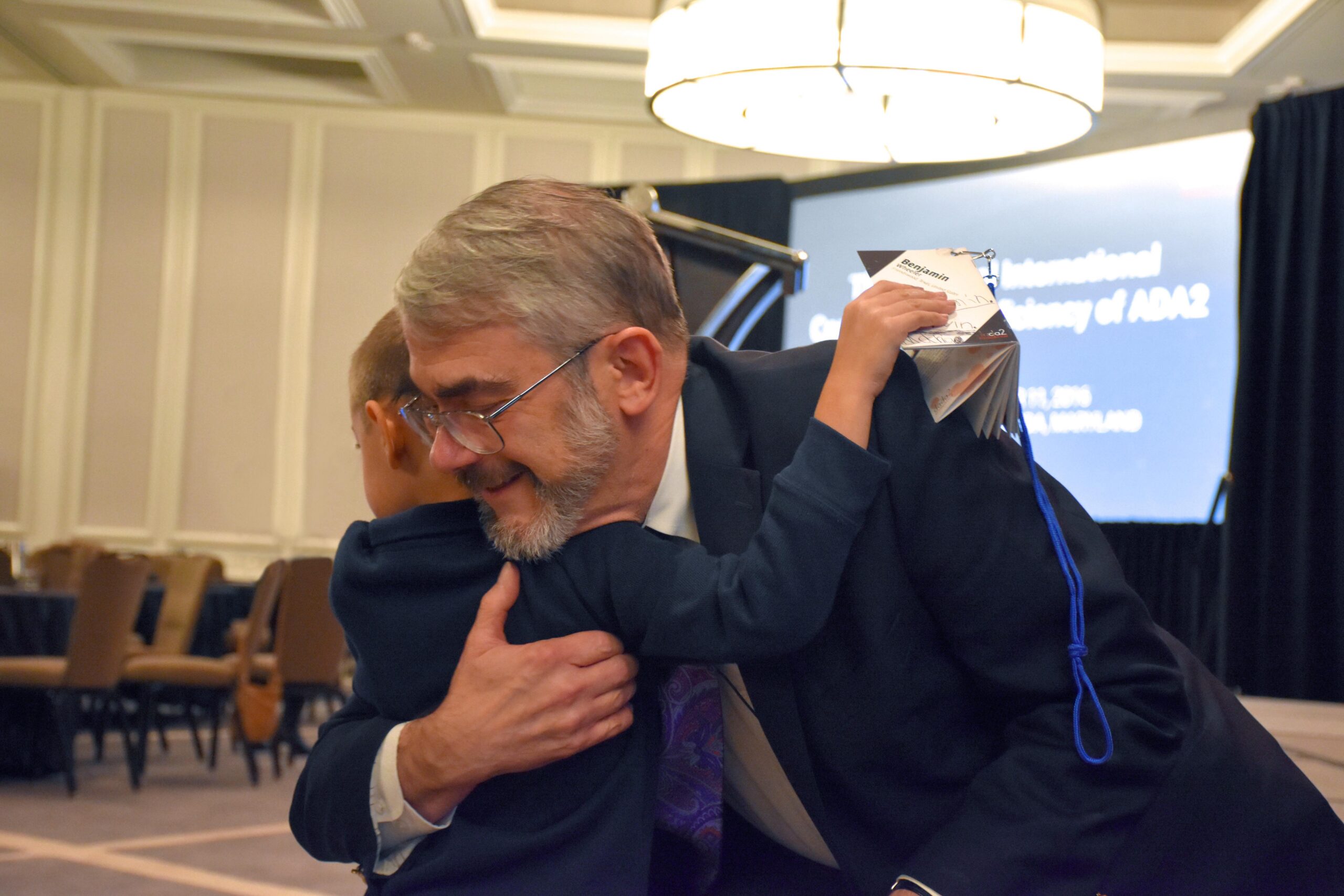
A moment that reflects what mattered most to Dan: the patients and families behind the science. 2018.
Allow me to speak of Dr. Dan Kastner by his first name for a moment, because that is who Dan was: the human scientist.
Across the more than ten years I knew him, Dan never failed to ask about my family — especially our children, both of whom live with DADA2. He was far more than a researcher; he possessed a rare depth of humanity, and understood, in a way few do, that while science matters profoundly, it exists in service of human beings, patients, and families.
With that in mind — and it may be the most important thing I can offer in remembering Dan — I would like to share some reflections, on behalf of the DADA2 Foundation, about Dan Kastner, MD, PhD, formerly Scientific Director of the Division of Intramural Research at the National Human Genome Research Institute and co-discoverer of DADA2.
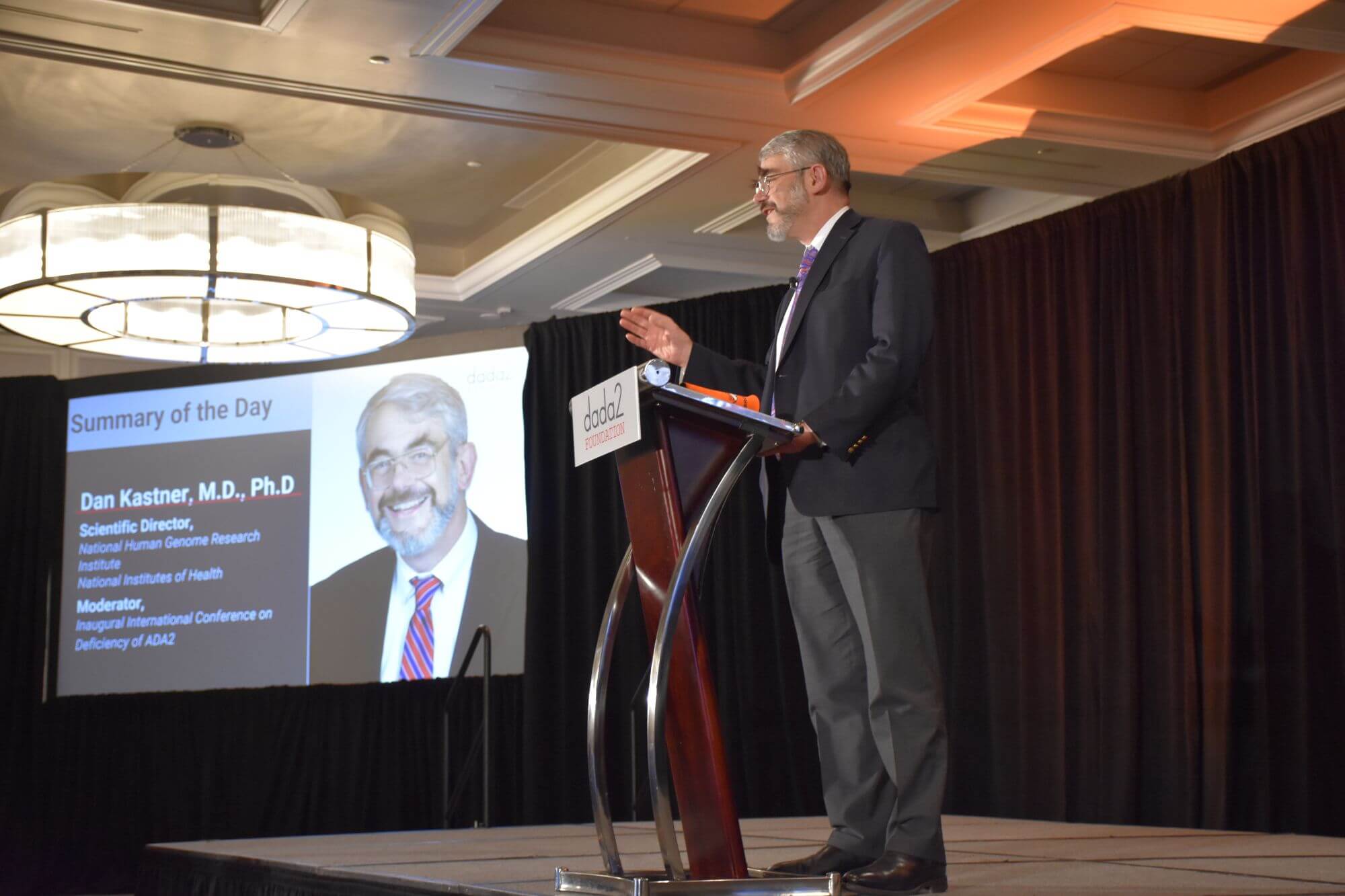
Much has already been written about Dr. Kastner’s considerable professional accomplishments. Few know that he began his career with a Bachelor of Arts in philosophy. I have come to believe that this foundation nurtured the intellectual curiosity that would later define his career in medical research.
A true Renaissance man, Dr. Kastner went on to investigate a wide range of autoinflammatory diseases, traveling the world in pursuit of answers.
I first met Dr. Kastner after both of my children were diagnosed with DADA2 at the Mayo Clinic. We traveled to the NIH, and in his lab and clinic we found not only the beginning of our children’s clinical journey but the origin of the Foundation itself — from its very first meeting to where it stands today.
Foundation Beginnings & Network Growth
I would be remiss not to describe how that first meeting came about. I had requested time with Dr. Kastner’s team to discuss hosting a conference, and they arrived prepared to discuss the science of DADA2 at length. In the final minutes, Dan explained that his team could neither fund nor host the meeting. I replied, “That’s just fine — I have that covered. So let’s set a date.” He agreed without hesitation.
I did not, in truth, have the funding secured at that moment, but I knew I could secure it, and I was not prepared to lose his involvement. He went on to moderate our meetings every year thereafter, on one occasion arriving only weeks after shoulder surgery, still in a sling.
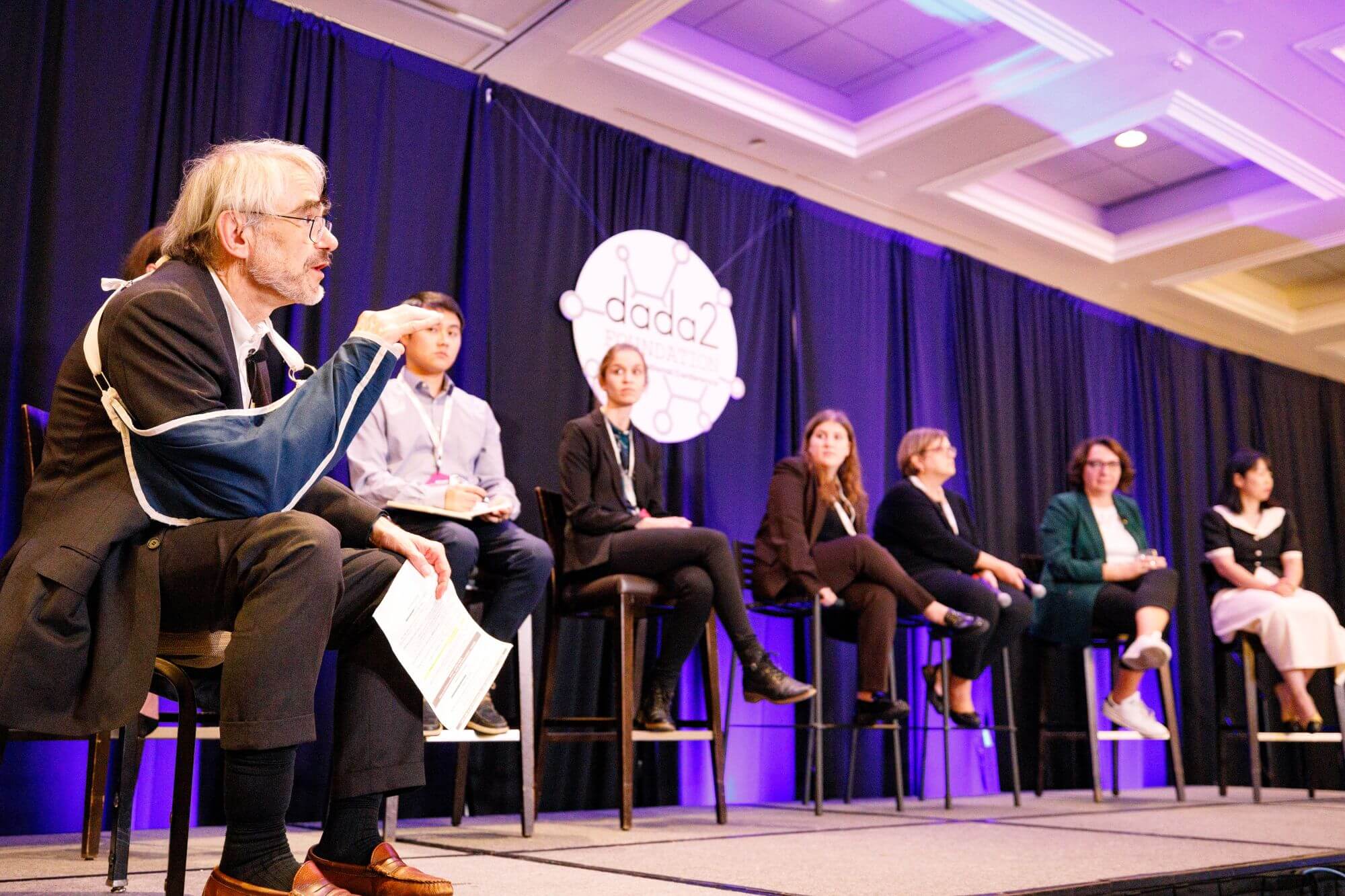
It was this investment — reflected, in part, in his continued moderation of those meetings — that likely helped grow the DADA2 research community into one of the most notable of its kind.
His dedication and considerable intellect drew many researchers to those early gatherings, and his sustained engagement helped keep them involved, encouraging a number to establish laboratories of their own. While Dr. Kastner remains DADA2’s founding researcher, the disease is now fortunate to be studied by laboratories around the world, each pursuing treatments and, ultimately, a cure.
Curiosity & Humanity
Dr. Kastner also welcomed a good question, from wherever it came.
Though I am a physician, my own training is in endocrinology. Even so, Dr. Kastner entertained countless lines of inquiry with me — questions born of my children’s experiences and needs — until he had, in effect, accepted and respected me as something of an armchair rheumatologist.
No question struck him as too unlikely to merit real conversation.
His researcher’s mind moved into the clinical world with such ease that I believe it is precisely why he made such progress, both within his own team and across the global research community, toward understanding patients and the disease itself.
Yet amid the rigorous science, the searching conversations, and the sheer intellect, Dr. Kastner always made time for his patients. I believe part of what drew him to invest so deeply in DADA2 was its devastating toll on children, including the strokes it can cause.
We are grateful to hold an iconic photograph of him embracing a young patient at our first conference. It serves as a constant reminder that he cared for my family, and he cared for every patient he encountered.
Dr. Kastner — Dan — will be missed. He already is. My family carries deep gratitude for his engagement and for his life’s work, and I know we are far from alone in that.
So, we thank Dan. We thank his family for sharing him with the scientific community, and with the countless individuals whose lives have been touched by rare disease.
His impact will extend further than any of ours — until a cure is found.
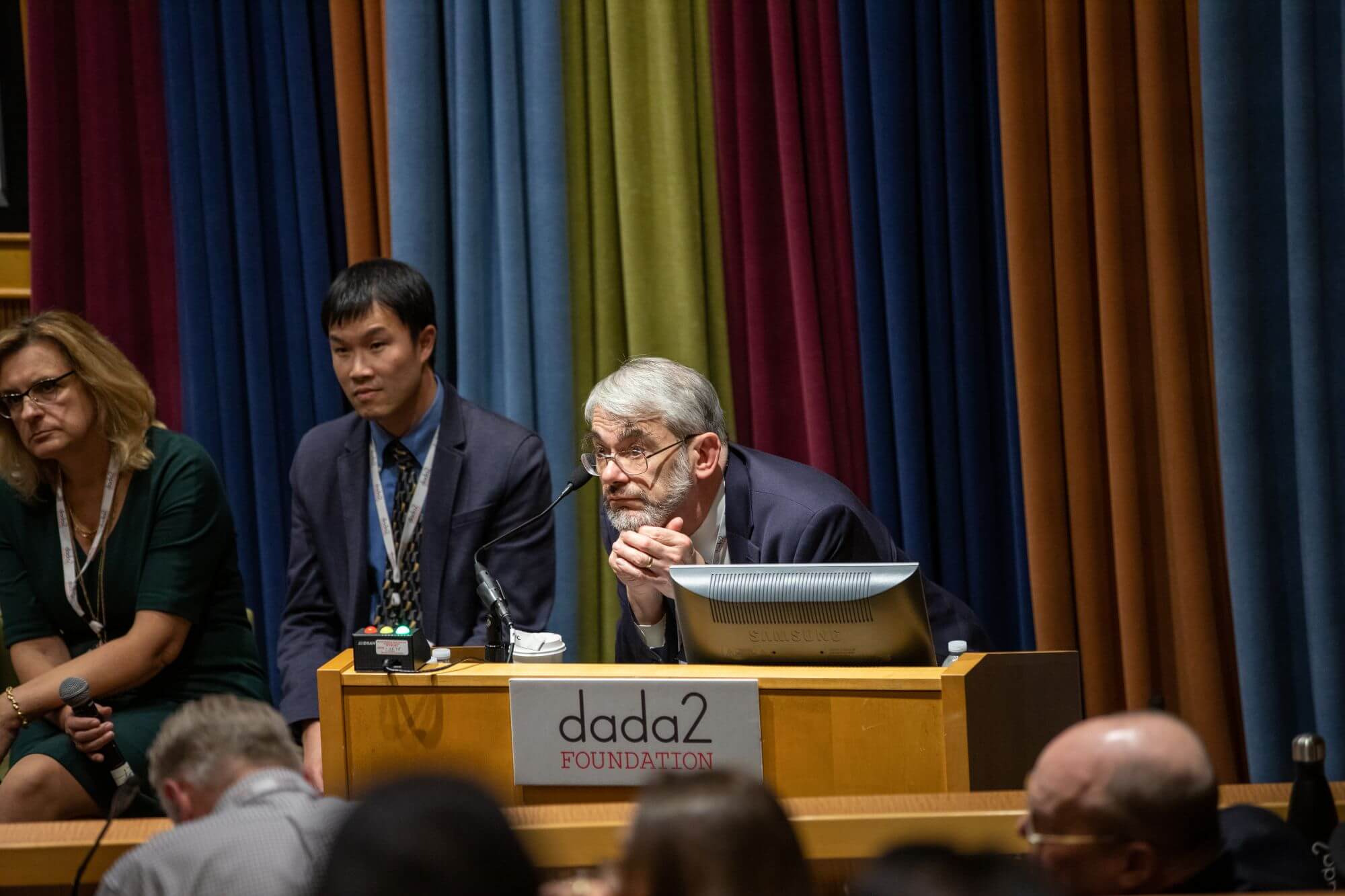
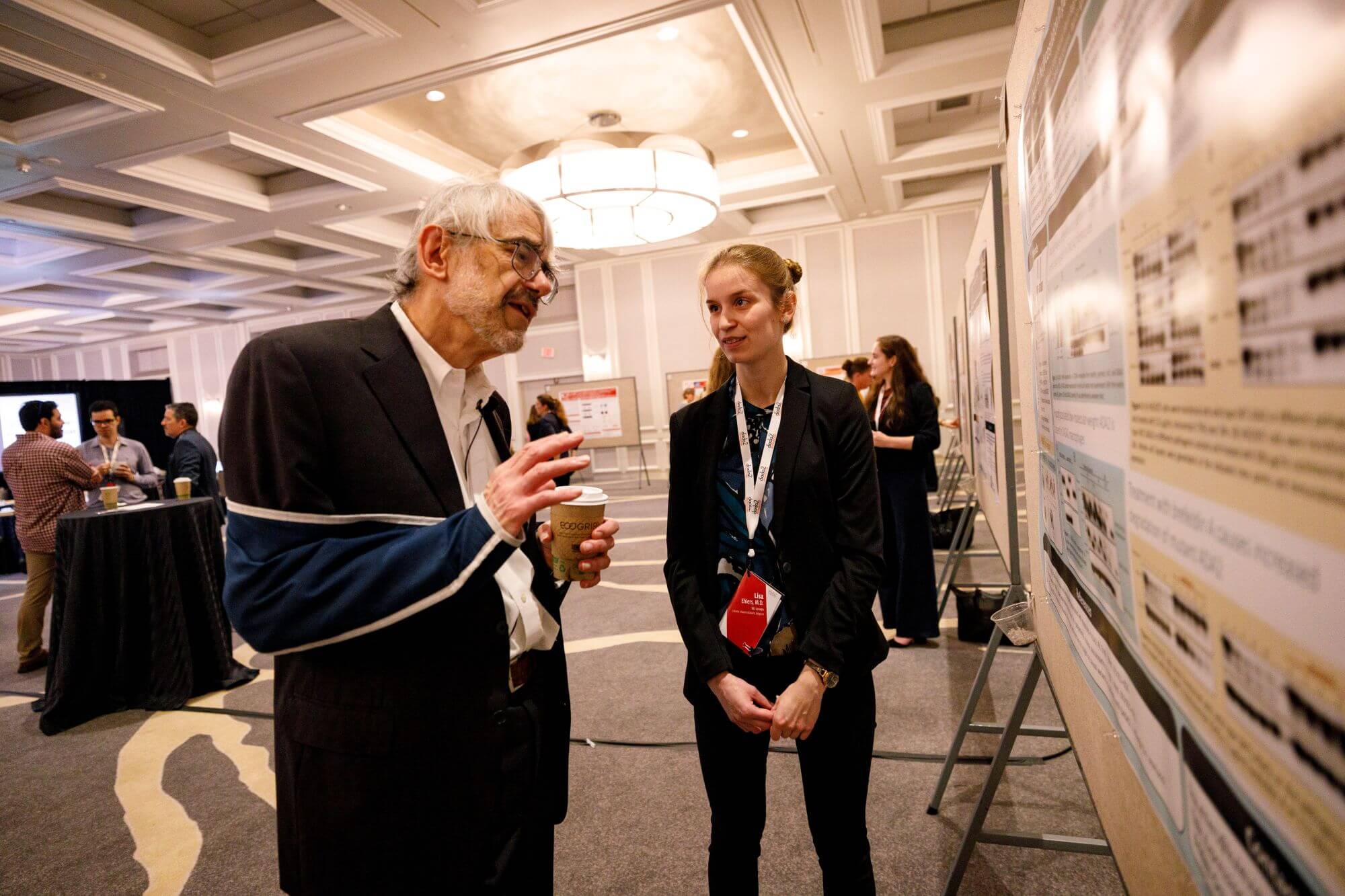
Dr. Kastner in the way we all know him: leaning in to engage. 2016.