April 2026: Action on a Global Level

Action on a Global Scale

I will keep my letter short this month as there is so much to share from around the globe. From patients finally receiving new insight into their care following more than a decade of illness to researchers embarking on global travels (virtual and in person!) to share about DADA2, we continue growing our network and resourcing patients.
One important note: if you are a patient, our next gathering is May 20, 2026, virtually at 8:00p.m. London time. Please register if you plan to come or if you want to receive the recording after! More details below.
As I look ahead, I am thinking about our 10th Anniversary, which we will kick off this summer. This is really an inflection point for the Foundation. It’s not just a milestone year, but it is a marker that we are on the precipice of so much: closer than ever to specific disease treatments and cures, helping more and more newly diagnosed patients and their clinicians, and seeing research carried out throughout the globe.
To keep up with the pace of growth, it will take all of us coming together to raise awareness, keep the research collaborative, and create a sustainable footing for the Foundation. More on how we’ll honor this hard but rewarding work is coming – I encourage you to think about your role!
Celebrating the wins below,

Chip Chambers, M.D., Founder & President, DADA2 Foundation
Patient Story: Amber Whitmer goes to the NIH
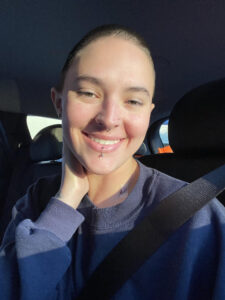 “She knew a resource, and she shared it,” says DADA2 patient Amber Whitmer about finally meeting a physician who knew what to do with a DADA2 diagnosis.
Amber’s earliest memories include pain. And while her health stayed stable until her late teens, Amber’s family knew something wasn’t right. Her first genetic panel in her elementary school years didn’t reveal DADA2 because it wasn’t part of the panel at that time. But her diagnosis in 2023 – thanks to Dr. Pui Lee at Boston Children’s/Harvard suggesting a new genetic panel – helped to set Amber on a new path.
Amber was already on Enbrel for her pain, and she spent the last three years managing a schedule of ten specialists. Even with genetic tests revealing her diagnosis, her specialists remained at a loss. In fact, one physician said, “You need an expert and I do not know of one.” Amber even sent the consensus statement to physicians to help guide her care.
Finally, through advocating for herself to find new physicians with new ideas, Amber found immunologist Dr. Jolan Walter M.D., Ph.D. Dr. Walter knew that the National Institutes of Health (NIH) in Washington, DC, USA, followed DADA2 patients – 80+ patients, to be exact. So, a referral was sent.
Amber just returned from the NIH this past week and is awaiting results of new tests to determine the best next path. She was able to switch medication she had been taking for 16 years for one that may lead to better outcomes. And she is now enrolled in two studies.
“I met another DADA2 patient while I was there, I learned more about myself, and I will do follow-ups to see how this new protocol helps my situation,” says Amber.
Stories like Amber’s point to the clear need to raise awareness among physicians throughout the world that there is a resource to help guide the care. And that is part of our mission: to convene the world’s clinicians and researchers around treating and curing DADA2. We are grateful Amber was willing to share her story!
Mark your Calendar: Patient Gathering on May 20
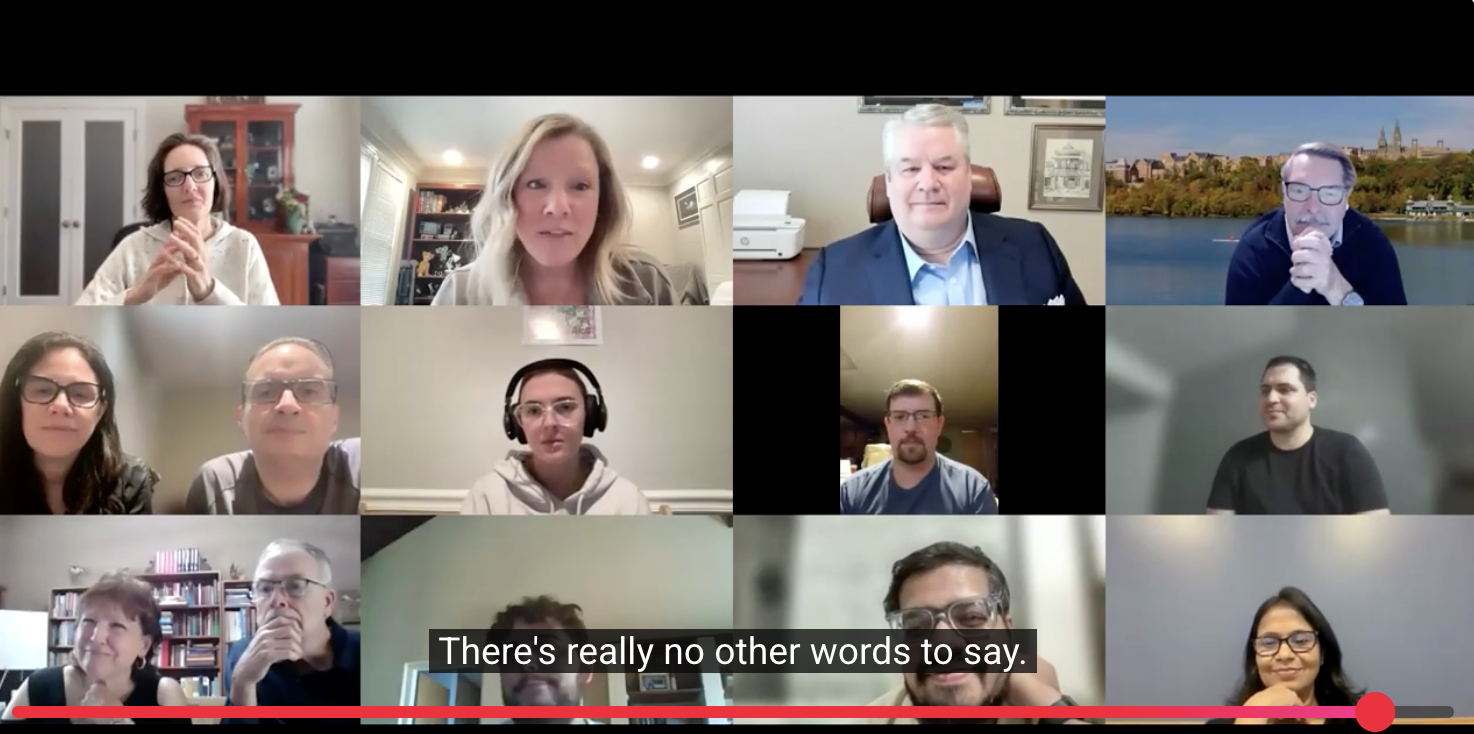
Patients – mark your calendar! We’ll hold our next online patient gathering on Wednesday, May 20 at 8:00 p.m. London time. Thank you for sharing your preferred time options in our poll! We did our best to accommodate the majority.
You also shared that genetic therapy is of great interest! Lex Cowsert, Ph.D., our Chief Scientific Officer, will provide both an overview and a deep dive into the various projects happening globally to explore this future treatment, as well as the science of how genetic therapy works – all in a way that patients and families can understand. While Lex is not a physician and cannot answer medical questions, he carries deep knowledge in what it takes to take treatments from research labs to approved therapies. Please note: these gatherings are designed for patients. If you are a researcher or clinician, please reach out to us separately by emailing info@dada2.org!
The Long-Game of Research:
Lessons from Three Decades of Care
We caught up with Dr. Yakov Berkun, Head of the Immunology Department at Hadassah Medical Center in Jerusalem, Israel. In a recent article – The Natural History of Deficiency of Adenosine Deaminase 2 Vasculitis in a Large Cohort and Factors Associated With Disease-Related Damage, Dr. Berkun and his colleagues – including Dr. Reeval Segal, Director of the Child Genomics Center at Shaare Zedek Medical Center – boiled down their 30+ years of following a large group of DADA2 patients into practical considerations for any newly diagnosed patient and/or clinician caring for a DADA2 patient. The group was the first to describe DADA2 in the New England Journal of Medicine in 2014 at nearly the same time as an National Institutes of Health (NIH) study.
The findings of this most recent paper are perhaps the longest-recorded clinical follow-ups in the world and include:
- The Importance of Early Detection: The research shows that patients whose symptoms began before the age of ten are more likely to develop disease-related damage.
- Predicting Severe Illness: Recurrent symptoms such as muscle or abdominal pain, skin ulcers, and high blood pressure are often early indicators that more aggressive treatment may be needed to prevent future complications.
- Safety of Long-Term Treatment: Many of the patients studied have been receiving TNF inhibitors for over two decades—including one patient treated since early infancy for more than 24 years—with excellent results.
- A Proven Track Record: From these families, findings show that long-term use of these medications is both safe and highly effective in maintaining remission and protecting against serious complications such as stroke.
Dr. Berkun and his team’s outlook points to positive options for patients: “Because we have been following our patients for many years, we are confident that prompt initiation of TNF inhibitors can help prevent severe disease progression. Our experience shows that, with the right care, patients can achieve stable, long-term health. The vast majority of patients in our cohort achieved complete or partial remission, demonstrating that with consistent and expert care, the outlook for DADA2 is very positive.”
Dr. Berkun has been sharing the results of the study globally, more of which we will share soon!
Raising Awareness Globally & Tackling Challenges
Dr. Cowsert is on the move, literally and virtually! This month, Dr. Cowsert joined two communities to share about DADA2 and engage in meaningful discussions regarding the challenges that rare disease research faces.
The first stop was a virtual one to present at the Pediatric Rheumatology European Society (PRES) gathering on April 9-10. The conference took place in Rome. Dr. Cowsert had the chance to share updates from the Foundation, including the latest on our pursuit of PEG-ADA2 as a future treatment, as well as developing the ADA2 Now meter as an in-office diagnostic tool. Both projects continue to progress, but are in need of a partner and funding.
After that, Dr. Cowsert headed to Boston, U.S.A., to connect with other experts in rare autoinflammatory and immune deficiency diseases. Dr. Cowsert led a conversation about the challenges patient advocacy groups face when they’re working to improve treatments and tests. This meeting was organized by CZI/BioHub. Many of the attendees represented other patient-led rare disease advocacy groups that had received grants from the Chan Zuckerberg Organization Rare As One Network.
Awareness is critical. We take as many opportunities as possible to share about DADA2 around the world and appreciate the efforts of many researchers and clinicians who do so on their own time! Your donations can support this kind of engagement.
Game of the Week:
DADA2 Patient & College Athlete Raises Awareness
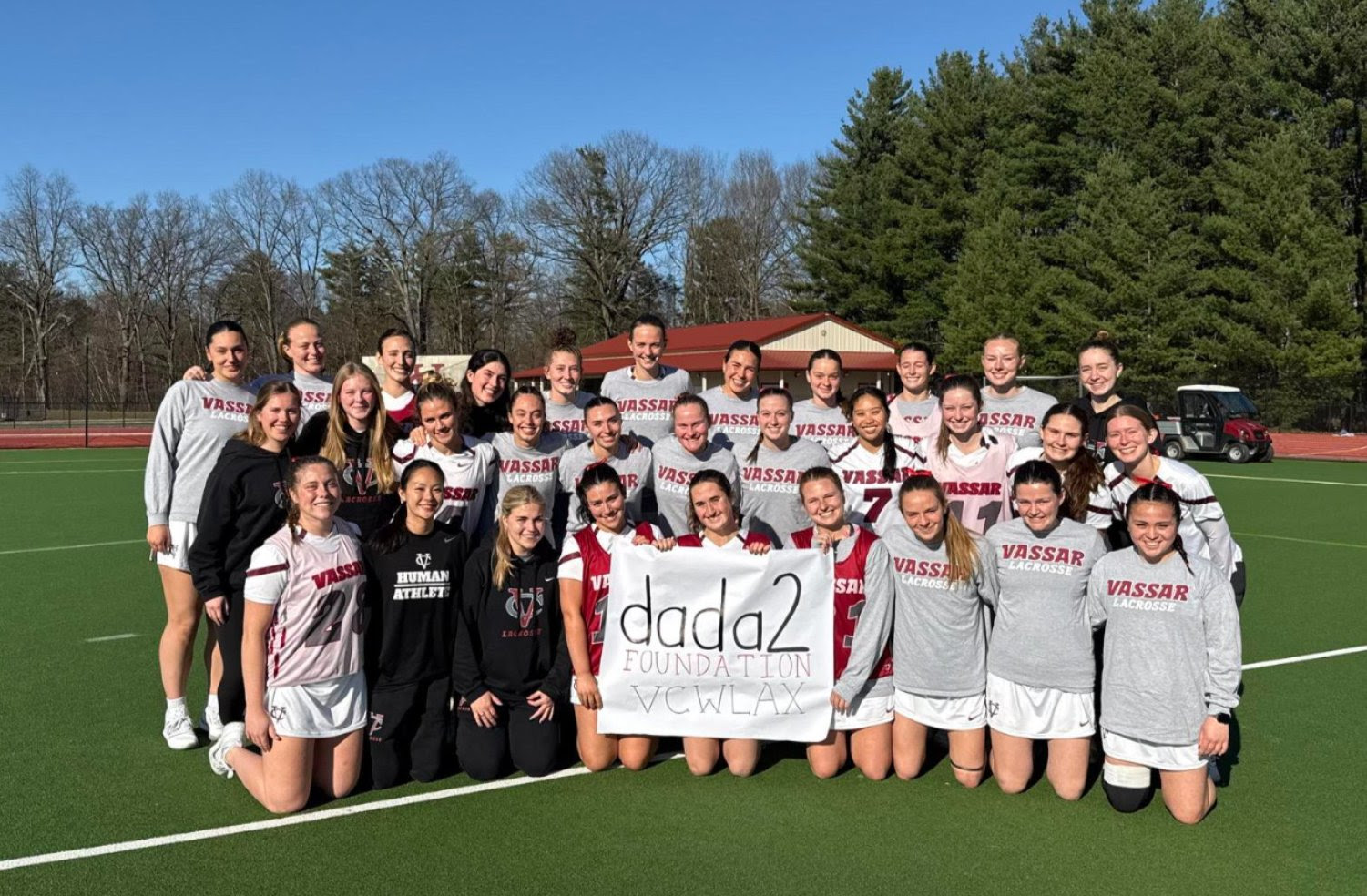
On April 8, Tess Billings and her Lacrosse team at Vassar College in New York, U.S.A., took on their rival in a spring classic game. Knowing it would be a highly watched game, Tess decided to raise awareness for rare disease patients during the game, which always features a charity. Tess and her teammates chose the DADA2 Foundation since she and her sibling navigate daily life with DADA2. In just one day, Tess raised more than $1,500. But more importantly, Tess loved letting others know that rare disease patients need the support of anyone! Congrats, Tess and team! Thanks for being a team player with the DADA2 Foundation.
Latest Research
The Natural History of Deficiency of Adenosine Deaminase 2 Vasculitis in a Large Cohort and Factors Associated With Disease-Related Damage. Engelstein Et al. The Journal of Rheumatology Apr 2026, 53 (4) 418-424
Role of adenosine deaminase 2 in hematopoiesis regulation. Rigamonti, Chiara. Ph.D. dissertation, Vita-Salute San Raffaele Free University of Milan. (2026).
Deficiency of Adenosine Deaminase 2: A Rare Cause of Stroke-related Dystonia in Young Adults — A Case Report. Lim, Thien. Et al. Acta Neurologica Taiwanica 35(2):p
Constitutional Bone Marrow Failure due to Immune Dysregulation Disorders. Miano, M., et al. Textbook of Bone Marrow Failure. Springer, Cham. (2026).